









Types of Fire Alarm Testing Equipment
Professional fire alarm testing equipment is available in several formats designed for routine inspection, commissioning and maintenance of commercial fire alarm systems.
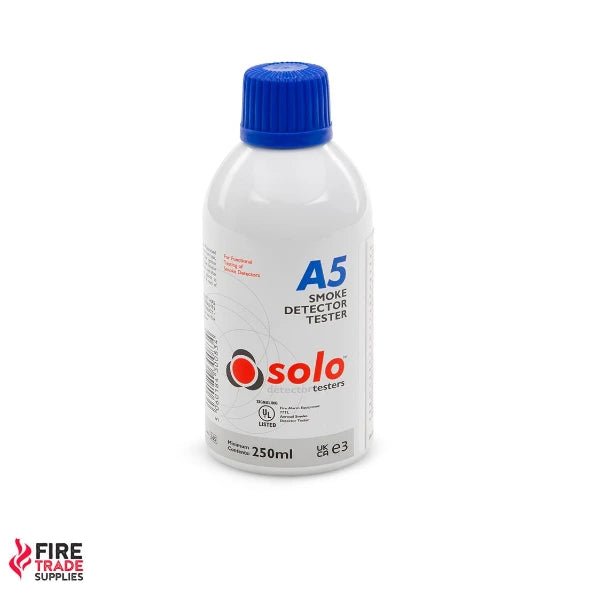
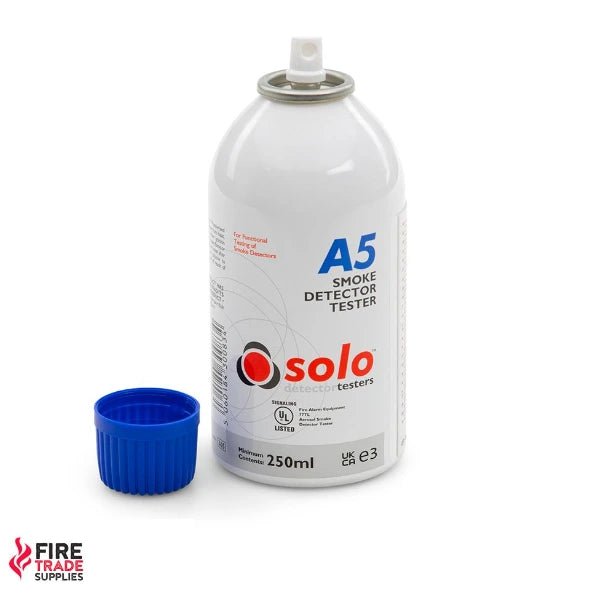
Smoke Detector Testers
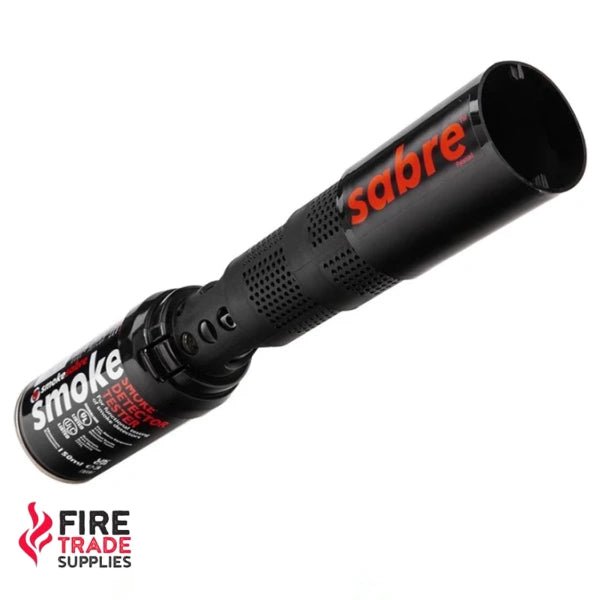
Smoke detector testers are used to safely simulate smoke conditions during routine detector testing and maintenance.
Heat Detector Testers
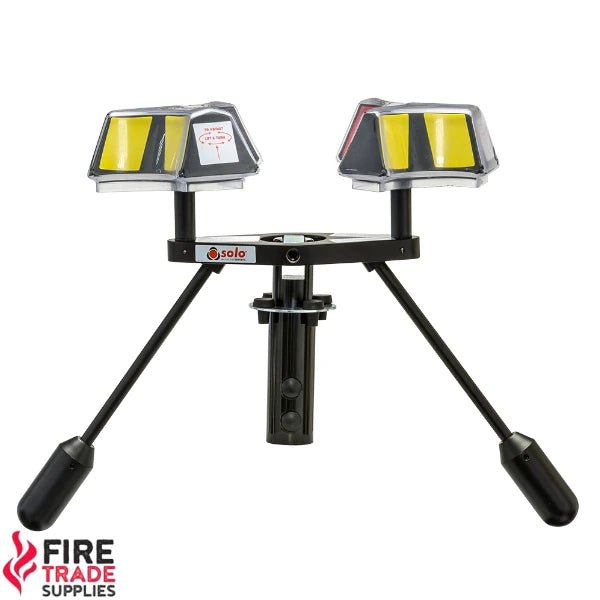
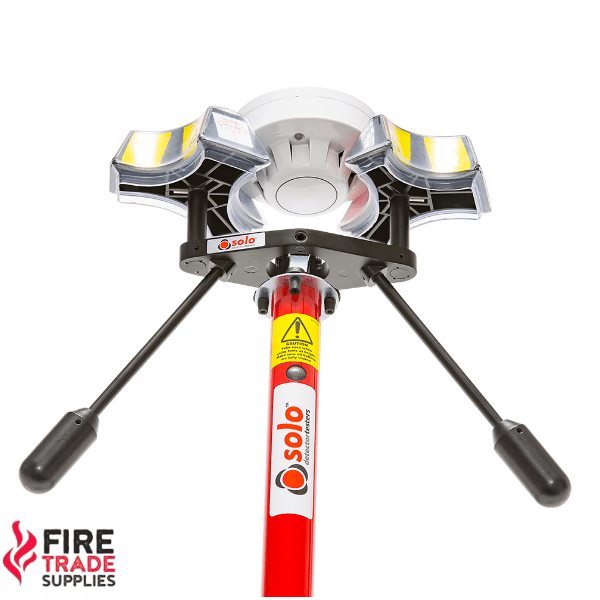
Heat detector testers apply a controlled heat stimulus to verify thermal detector activation and system response.
Carbon Monoxide (CO) Detector Testing Equipment
CO detector testing equipment safely introduces a controlled carbon monoxide stimulus for routine testing of CO fire detectors.
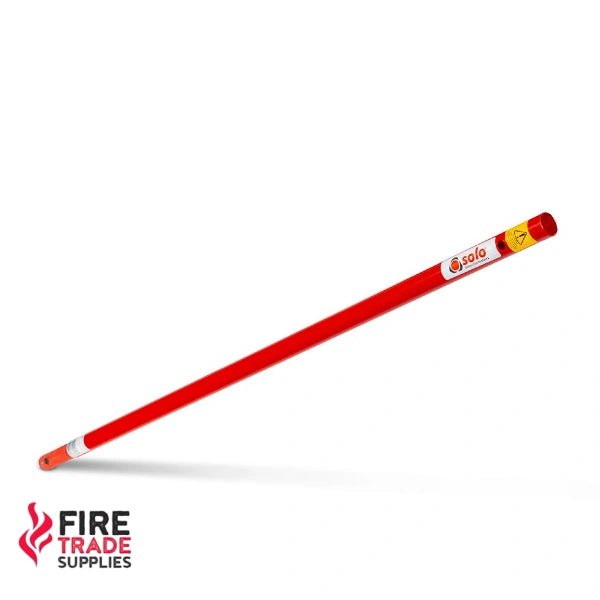
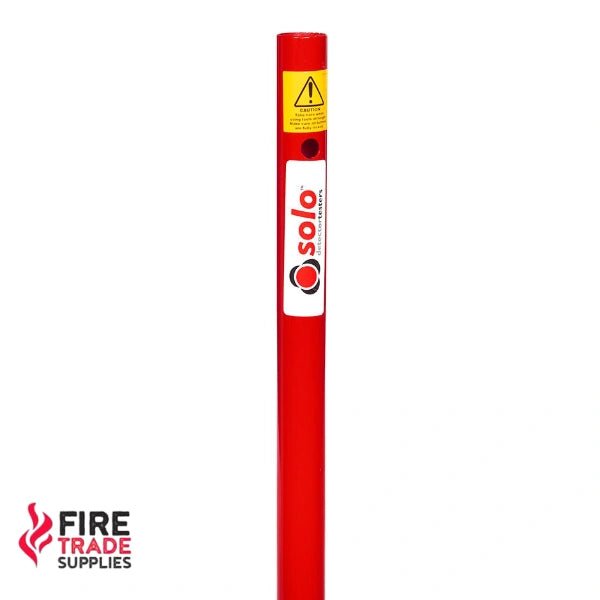
Detector Testing Poles
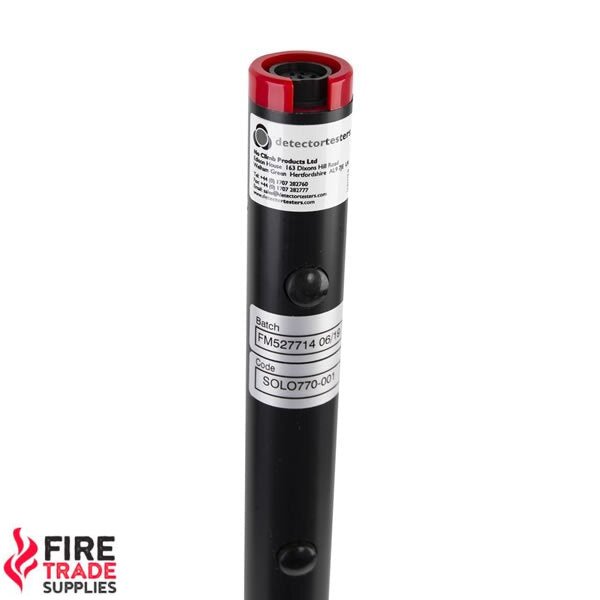
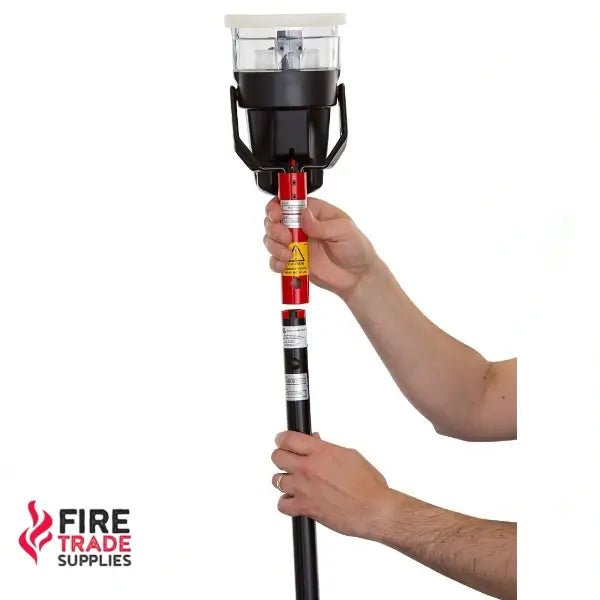
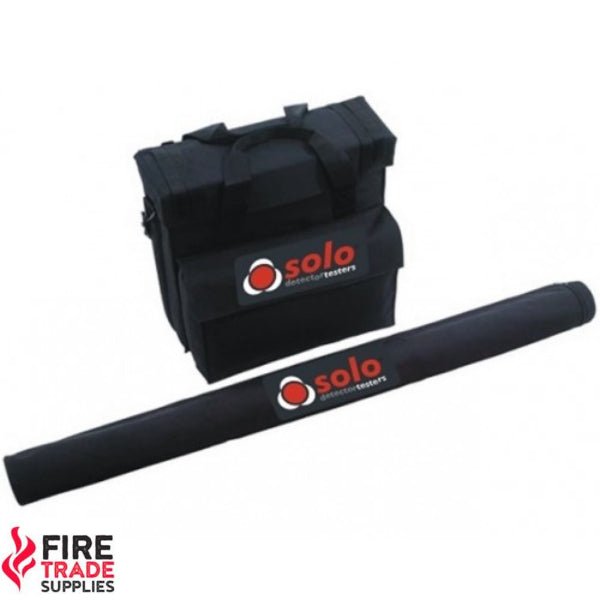
Detector testing poles and extension poles allow engineers to safely access ceiling-mounted detectors without ladders.
Fire Alarm Test Kits
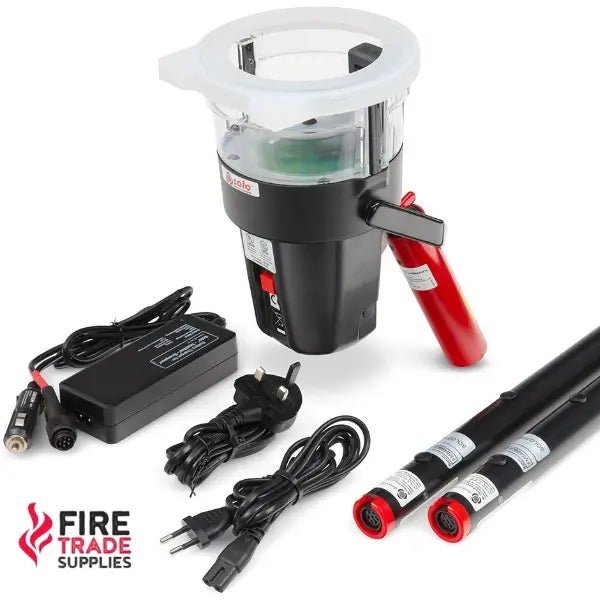
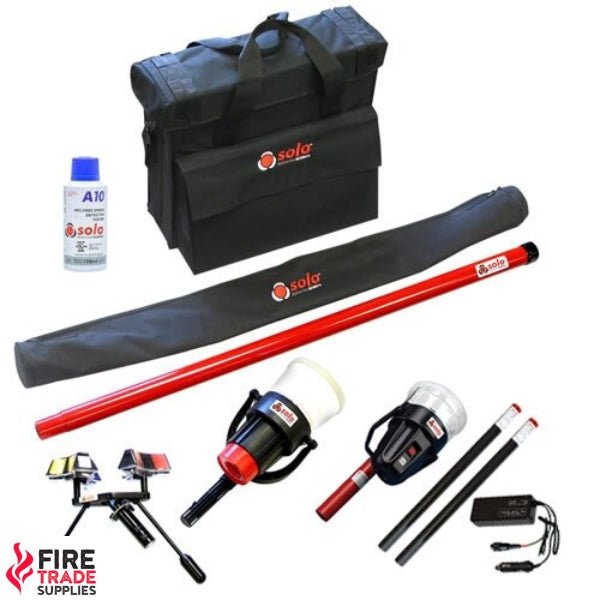
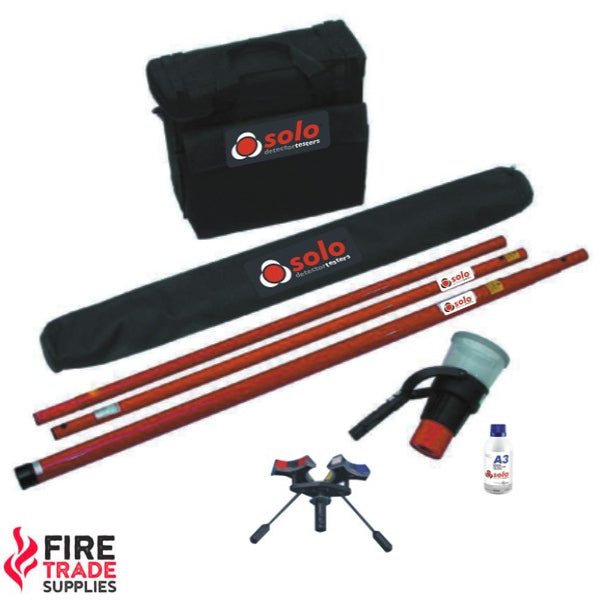
Fire alarm test kits combine detector testers, extension poles and stimulus delivery tools into complete portable testing systems for professional fire alarm maintenance.
What Is a Fire Alarm Testing Kit?
A fire alarm testing kit is a professionally configured set of tools used to test smoke, heat and multi-sensor fire detectors during routine fire alarm maintenance and inspection. Professional kits are designed to apply a controlled test stimulus that safely simulates fire conditions without contaminating or damaging detector sensing chambers.
Most fire alarm testing kits combine smoke or heat detector testers with extension poles and access tools, allowing engineers to safely test ceiling-mounted detectors without ladders. These systems help verify detector activation, control panel communication and overall fire alarm system performance during routine servicing and compliance testing.
Fire alarm testing equipment is widely used across commercial, industrial and residential buildings where reliable fire detection is essential. Browse professional testing kits, detector testers and access equipment from leading brands including Solo and Testifire.
To understand the full inspection process, read our guide on UK fire alarm testing requirements.
Smoke Detector vs Heat Detector Testing – What’s the Difference?
Smoke and heat detectors respond to different fire conditions and require different testing methods. Using the correct testing equipment helps confirm detectors activate safely and reliably without contamination or damage.
Smoke detectors are typically tested using specialist aerosol smoke or controlled smoke simulation tools designed to replicate real fire conditions safely. These allow engineers to introduce a measured test stimulus directly into the detector sensing chamber while maintaining detector integrity.
Heat detectors, require professional heat testing equipment that applies controlled heat safely to verify detector activation without exposing devices to open flame or uncontrolled temperature changes.
Professional fire alarm testing kits combine both smoke and heat testing capability, allowing engineers to test single-sensor and multi-sensor fire detectors using the correct method for each device type. This supports reliable system performance and ongoing compliance during routine fire alarm maintenance.
For detailed guidance, read our professional smoke detector testing methods guide and our comprehensive heat detector testing procedures article
What a Professional Fire Alarm Testing Kit Contains
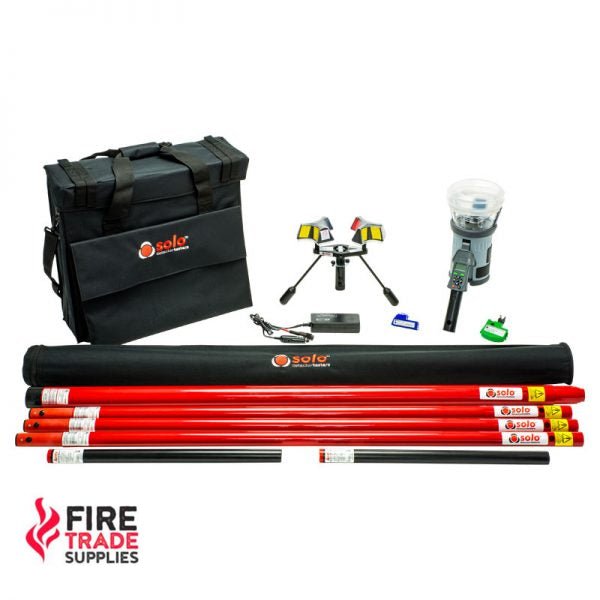
Most professional kits are built around three essential elements:
-
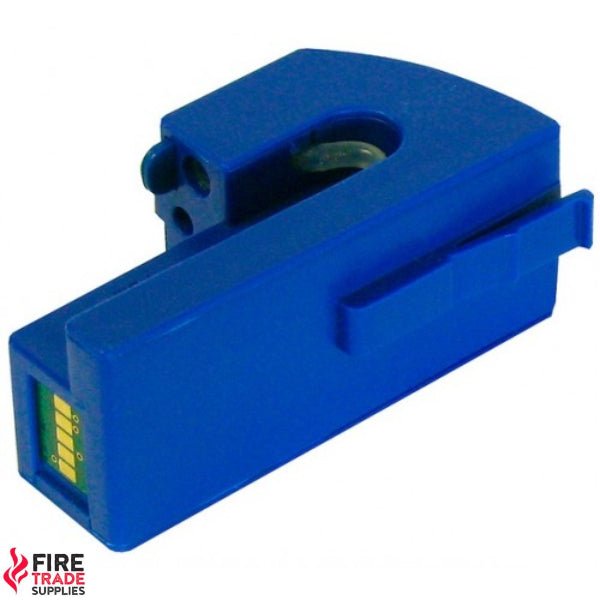
Detector testing heads for applying smoke or heat stimulus
-
Access poles for safe high-level testing without ladders
-
Stimulus delivery tools such as aerosol smoke, capsules or heat activation equipment
Together, these components allow technicians to activate detectors safely while protecting sensing chambers and installed devices. Kit configurations vary depending on detector types, access requirements and maintenance responsibilities.
Modular vs Integrated Testing Kits
Not all fire alarm testing kits are designed the same. Two main approaches are used across the industry:
Modular Kits
Modular fire alarm testing kits allow engineers to build a setup using interchangeable poles, detector testing heads and testing tools depending on site requirements. The Solo range of fire alarm testing equipment is built around interchangeable components, allowing engineers to configure equipment suited to different detector types, ceiling heights and maintenance environments rather than relying on a fixed single-unit system.
Integrated Kits
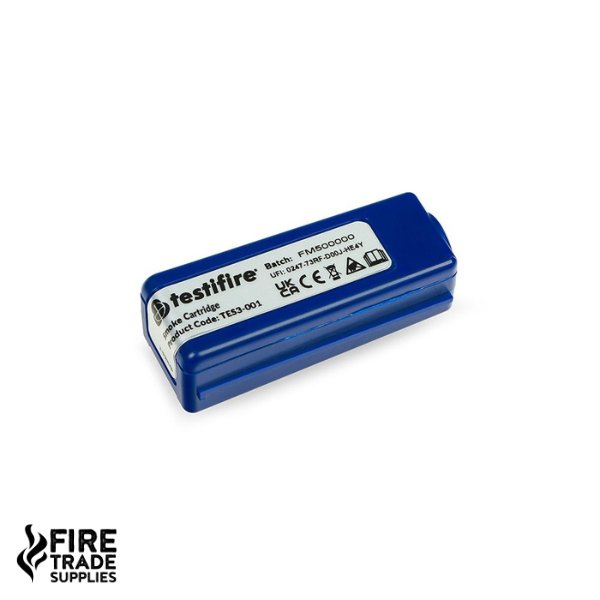
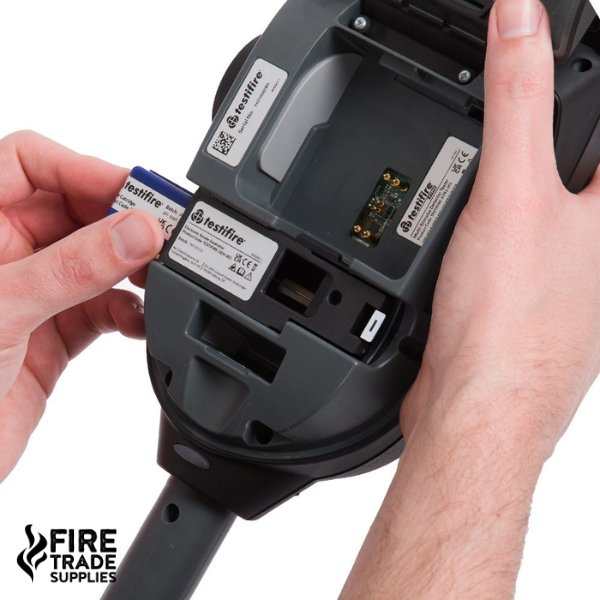
Combine multiple testing functions into a single device capable of delivering smoke and heat stimulus from one platform. Testifire and Testifire XTR2 are leading examples of this integrated approach, combining smoke and heat detector testing capability within one controlled unit. These systems allow engineers to test detectors efficiently and consistently without switching between separate testing devices.
Both modular and integrated fire alarm testing kits support professional fire system maintenance, with the preferred setup often depending on building type, testing frequency and maintenance responsibilities.
Choosing the Right Fire Alarm Testing Equipment
Selecting the right kit depends on:
- The type of detectors installed, such as smoke, heat, CO or multi-sensor detectors
- How frequently testing is carried out
- The ceiling height and access requirements on site
- The number of properties or systems being maintained
- Whether portability, flexibility or integrated testing is the priority
Contractors managing varied environments often prioritise flexible modular systems, while maintenance teams with consistent testing requirements may prefer integrated solutions for efficiency and standardisation. For added help check out our Solo vs Testifire buying guide.
Not sure which kit is right for you? Download our Fire Alarm Testing Kit Selection Checklist for clear guidance.
Where Fire Alarm Testing Kits Are Used
Professional fire alarm testing kits are used for routine maintenance, system commissioning, compliance inspections, fault investigation and preventative maintenance programmes.
They form part of essential fire alarm maintenance equipment used across commercial, residential and industrial environments where detector reliability, safe access and consistent system testing are required.
Fire Alarm Testing Questions?
For detailed guidance on compliance requirements, detector types, CO testing and the difference between modular and integrated systems, visit our Fire Alarm Testing Equipment FAQ page.
Professional Testing Systems: Solo & Testifire
Solo and Testifire are widely recognised professional fire alarm testing systems used by engineers, contractors and fire safety specialists across the UK.
Solo kits use a modular design, allowing engineers to combine detector testing heads, access poles and stimulus tools depending on site requirements. This makes Solo well suited to contractors maintaining multiple building types or working across varied environments.
Testifire and Testifire XTR2 provide integrated multi-stimulus testing in a single device, combining smoke and heat detector testing capability within one controlled unit. These systems are suited to maintenance teams prioritising speed, consistency and reduced equipment handling.
Both systems support professional fire system testing across commercial, industrial and residential environments.
Who Uses Fire Alarm Testing Kits?
Professional fire alarm testing equipment is typically used by:
-
Fire alarm engineers
-
Maintenance contractors
-
Facilities managers
-
Compliance officers
-
Landlords and managing agents
-
Fire safety professionals
They form part of essential fire inspection equipment required to maintain life safety systems in accordance with UK regulations.
Fire alarm testing should only be carried out by trained and competent professionals to ensure systems operate correctly, meet regulatory requirements, and protect building occupants effectively.
Compliance & System Maintenance
Routine testing is critical to ensuring continued system reliability.
A structured fire alarm testing kit supports:
-
Weekly and monthly testing regimes
-
Commissioning of newly installed systems
-
Planned preventative maintenance schedules
-
Fault diagnosis and verification
-
Compliance with BS 5839 recommendations
Using purpose-built fire alarm technician tools reduces the risk of incomplete testing, missed faults or detector contamination.
How Often Should Fire Alarms Be Tested in the UK?
Fire alarm systems should be tested regularly in line with BS 5839 guidance and the building’s fire risk requirements. Routine user checks are commonly supported by scheduled professional inspections, where engineers test smoke, heat and multi-sensor detectors using specialist fire alarm testing equipment.
Fire alarm inspection and detector testing should always be carried out by trained and competent professionals with appropriate knowledge of BS 5839 recommendations and system design. Incorrect testing methods can contaminate detectors, cause unnecessary faults or compromise system reliability.
Why Use a Complete Fire Test Kit?
Investing in a complete fire test kit ensures:
-
Controlled and accurate detector activation
-
Safer high-level access
-
Reduced disruption during inspections
-
Consistent testing standards across properties
-
Long-term reliability of life safety systems
For professionals responsible for maintaining operational fire detection systems, a correctly specified fire detector test kit is an essential part of specialist equipment inventory.
Recently viewed
Fire Alarm Testing Kit FAQs
There is no single licence required to carry out basic fire alarm testing, but the person responsible must be competent and understand how the system operates. In commercial environments this is typically a trained fire alarm engineer or maintenance provider, while in smaller premises the “responsible person” may carry out routine checks if they have been properly instructed. More advanced testing, commissioning or fault diagnosis should always be handled by qualified professionals.
Proper testing involves activating a detector or call point using the correct equipment to confirm the alarm triggers, signals transmit and sounders operate as expected. Testing should be controlled, documented and carried out without contaminating detectors or causing unnecessary disruption. Professional fire alarm testing kits are designed to simulate real conditions safely and ensure accurate results.
Yes. Fire alarm systems must be maintained and tested to ensure they remain operational, particularly in workplaces, HMOs and commercial premises. UK fire safety legislation places responsibility on the duty holder or “responsible person” to ensure life safety systems are regularly inspected and functioning correctly.
The “0.7 rule” generally refers to detector spacing guidance in fire alarm design, where coverage areas are calculated using 0.7 times the stated detector radius to ensure adequate protection. It is not a testing rule but a design principle used to position detectors effectively so they respond to fire conditions as early as possible.
Routine testing can be carried out by a competent person familiar with the system, such as a facilities manager or responsible person. However, professional servicing, fault investigation and compliance inspections should be completed by trained fire alarm engineers with the correct equipment and experience.
Recent updates to UK fire safety legislation and guidance have increased expectations around maintenance, documentation and system reliability, particularly in residential buildings and higher-risk premises. Responsible persons must ensure alarms are appropriate for the building, regularly tested and properly maintained in line with current standards and risk assessments.
Costs vary depending on building size, system complexity and whether testing is part of an ongoing maintenance contract. Routine checks may form part of scheduled servicing, while standalone inspections or engineer callouts will typically cost more. Investing in proper testing equipment can reduce long-term maintenance costs by improving efficiency and consistency.
Testing frequency depends on the type of building and system, but regular checks are expected to ensure continued operation. Weekly user checks and periodic professional inspections are commonly recommended to confirm detectors, sounders and control equipment respond correctly.
In simple premises, the responsible person may complete a fire risk assessment if they are confident in identifying hazards and evaluating risk. In more complex buildings or higher-risk environments, professional assessors are often recommended to ensure compliance and accurate evaluation of life safety requirements.
The safest approach is to use purpose-built testing equipment that introduces controlled smoke stimulus without contaminating the sensing chamber. Using household methods or improvised tools can damage detectors or lead to inaccurate test results.
Proper testing usually requires a combination of detector testing heads, access poles and stimulus delivery tools such as smoke aerosols or heat activation devices. Using the correct configuration ensures detectors respond accurately and consistently.
The time required depends on the size of the building, number of devices and access conditions. Small systems may be tested quickly, while larger commercial environments require structured, methodical testing programmes.
Still Have Questions?
If we still haven't answered your question, you can contact us below and we will get back to you as soon as possible.