






Recently viewed
Vesda FAQ's
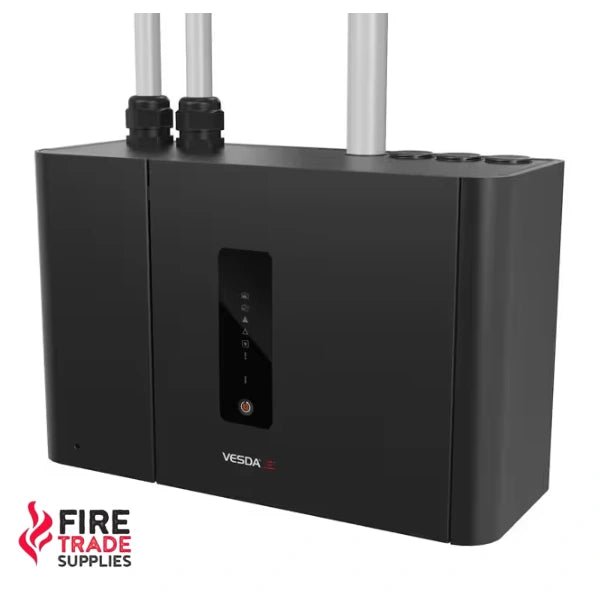
A VESDA system constantly samples the air through a network of pipes and analyses it for the smallest traces of smoke, providing advanced warning long before conventional detectors activate.
Traditional smoke detectors respond once smoke has already reached the sensor. VESDA, however, actively draws in air and analyses it, making it far more sensitive and capable of giving earlier alerts.
VESDA systems are designed with maintenance in mind. While they do require periodic filter changes and system checks, servicing is straightforward for trained engineers.
The initial investment is higher than standard detectors, but the early warning benefits, reliability, and reduced downtime often make VESDA more cost-effective in high-value or mission-critical environments.
VESDA detectors integrate with conventional or addressable fire alarm panels via relay outputs or direct communications modules, allowing alarms and fault signals to be reported instantly.
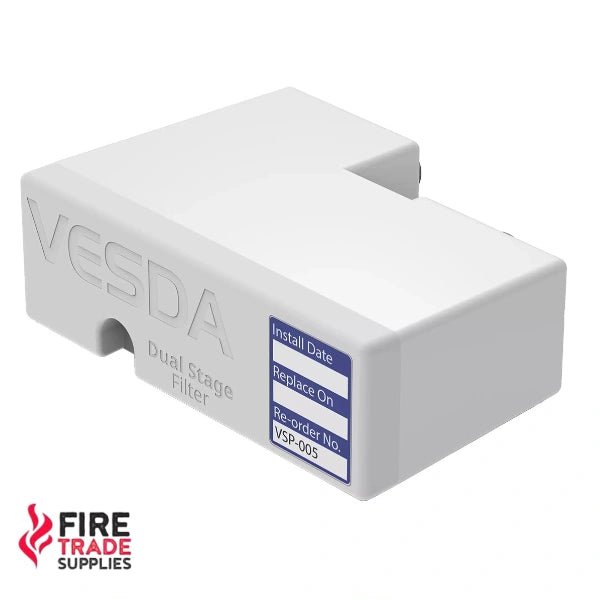
Typically, filters last 2–4 years, depending on the environment. In dustier conditions, they may need replacing sooner to keep the system working effectively.
Test points are positioned on the sampling pipe network, usually at accessible locations, to allow engineers to introduce smoke or test gas during routine maintenance.
VESDA systems use multiple alarm stages, often including:
Alert – very early smoke detection
Action – smoke levels increasing, investigation required
Fire 1 – significant smoke detected
Fire 2 – high concentration, immediate response needed
VESDA is typically required in high-risk or sensitive environments such as data centres, cleanrooms, cold storage, airports, and heritage buildings where early detection is vital.
VESDA stands for Very Early Smoke Detection Apparatus. It refers to a type of aspirating smoke detection technology that continuously samples air from a protected area and analyses it for smoke particles at extremely low concentrations. VESDA systems are designed to provide staged early warning signals before visible smoke develops or conventional point detectors activate.
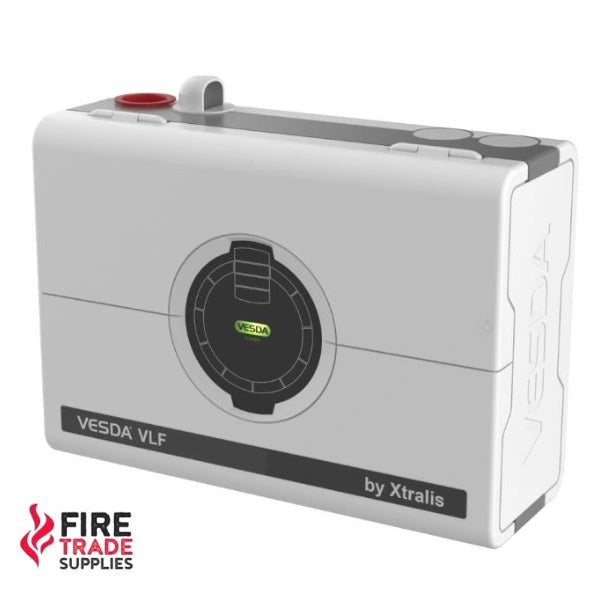
A VESDA system works by actively drawing air through a network of sampling pipes into a central detection unit. The sampled air is analysed using high-sensitivity optical or laser-based detection technology. When smoke particles are detected at predefined thresholds, the system generates staged alerts and can signal a connected fire alarm control panel. This continuous air sampling allows earlier detection compared to traditional ceiling-mounted smoke detectors.
VESDA is a well-known brand of aspirating smoke detection systems. The term “aspirating smoke detector” describes the technology itself — a system that samples air through pipework for smoke analysis. VESDA is one of the leading manufacturers of this technology and is widely specified in critical and high-risk environments.
Many VESDA aspirating smoke detectors are classified under EN 54-20, which defines sensitivity classes for aspirating systems:
Class A – Very high sensitivity for critical environments such as data centres and clean rooms
Class B – Enhanced sensitivity for high-value or large spaces
Class C – Standard sensitivity for general applications
The appropriate class depends on risk assessment, pipe design and building use.
No. A VESDA system does not replace a fire alarm system — it forms part of one. VESDA aspirating smoke detectors integrate with fire alarm control panels and provide early warning detection within the overall life safety system. They are often used in conjunction with other detection devices depending on the building design and risk profile.
VESDA systems are typically tested by introducing approved test smoke through designated sampling points or test ports within the pipe network. Engineers verify correct airflow, detector response and signal transmission to the fire alarm control panel. Routine maintenance may also include filter inspection, airflow calibration checks and system diagnostics to ensure continued performance.
Yes. Certain VESDA models are specifically designed for challenging environments such as industrial facilities, cold storage areas and locations with high airflow or dust levels. Advanced filtration, airflow monitoring and configurable sensitivity settings help maintain reliable performance in conditions where conventional smoke detectors may struggle.
Routine VESDA maintenance typically includes:
Filter inspection and replacement
Airflow and pipe integrity checks
Functional alarm testing
System diagnostics and sensitivity verification
Maintenance frequency depends on environmental conditions and system design, but regular servicing is essential to ensure continued early warning performance.
Still Have Questions?
If we still haven't answered your question, you can contact us below and we will get back to you as soon as possible.